
Ferran Brooks, From the Camera to the Cutting Room

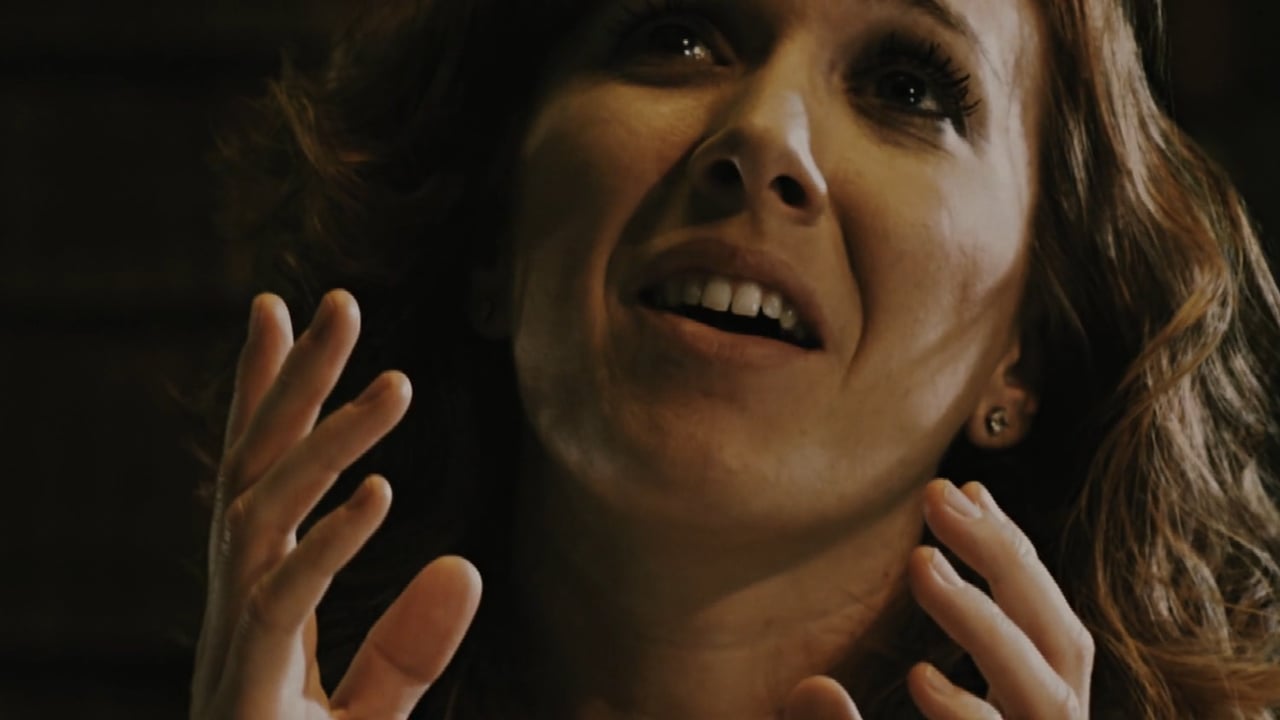
On the Vimeo page for M is for Malthusianism, a woman raises her hands close to her face. The light catches the skin on her fingers and leaves the room almost unreadable. The image has to give us both a person and the space she is afraid of without explaining what has happened. One way into Ferran Brooks’ work is through what a shot like that lets an editor put next.
Brooks wrote and directed the short and is also credited for the edit, production design and cinematography, the last shared with Federico Taus. Nacho Fito was the art director and Jesús Calderón composed the score. Those credits tell you where to look. A close-up can carry the texture of a set you see very little of. A sound can suggest the part of the room the camera has kept out of view. In this film, several of the choices that get made on set and revisited in the edit came back to Brooks.
M is for Malthusianism
Digital Times
Digital Times brings a separate kind of image into the cutting room. Nuria Cidoncha wrote and directed the Valencian-language documentary. DocsValència describes a short made with images from a family archive and material generated with AI. The film’s subject is how technology changes what people think they remember. An image can be old without being reliable. A newly made one can acquire the look of something a family has preserved for years.
Spain’s ICAA credits Brooks and Cidoncha as editors. Its catalogue also lists both in production. Fernando Arroyo is credited for cinematography and Iván Cordero for sound design. The credits help sharpen the distinction between the two films. Brooks had wide responsibilities on M is for Malthusianism. On Digital Times, the work belongs to Cidoncha as writer and director, and her collaboration with Brooks includes decisions about how family records and newly constructed images share a screen.
Read the DocsValència programme and credits for Digital Times.
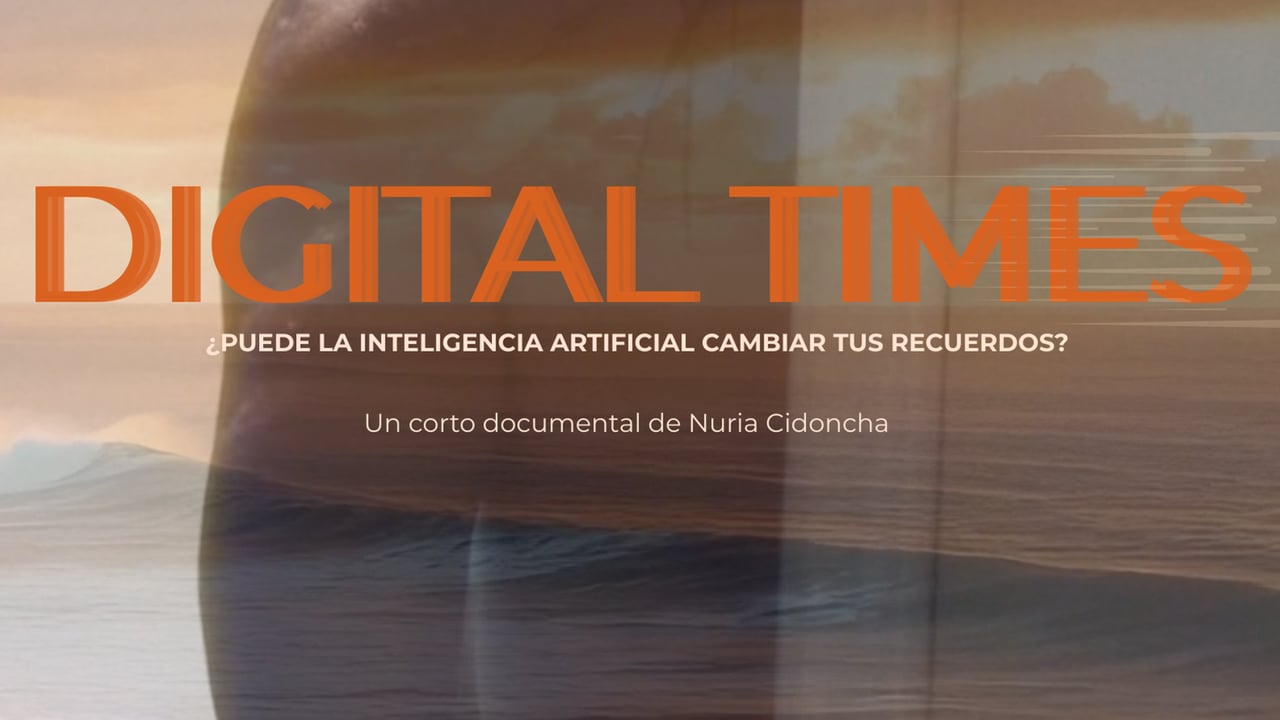
Even the trailer artwork takes a position on the film’s question. The bold title and dark figure sit over a view of water. You can recognize the pieces without knowing which layer belongs to an archive. The edit gives the short a place to turn that uncertainty into a story about the person doing the remembering.
Brooks has also posted publicly about VECinema, his exploration of generative film workflows. The shorts give a viewer a better place to catch what remains familiar while that machinery changes. The frightening room in M is for Malthusianism depends on where an editor leaves the audience looking. In Digital Times, the adjacency of two images can affect what an audience accepts as a record. In both cases, one shot can supply a piece of evidence and the next can make it harder to know what that evidence amounts to.


