
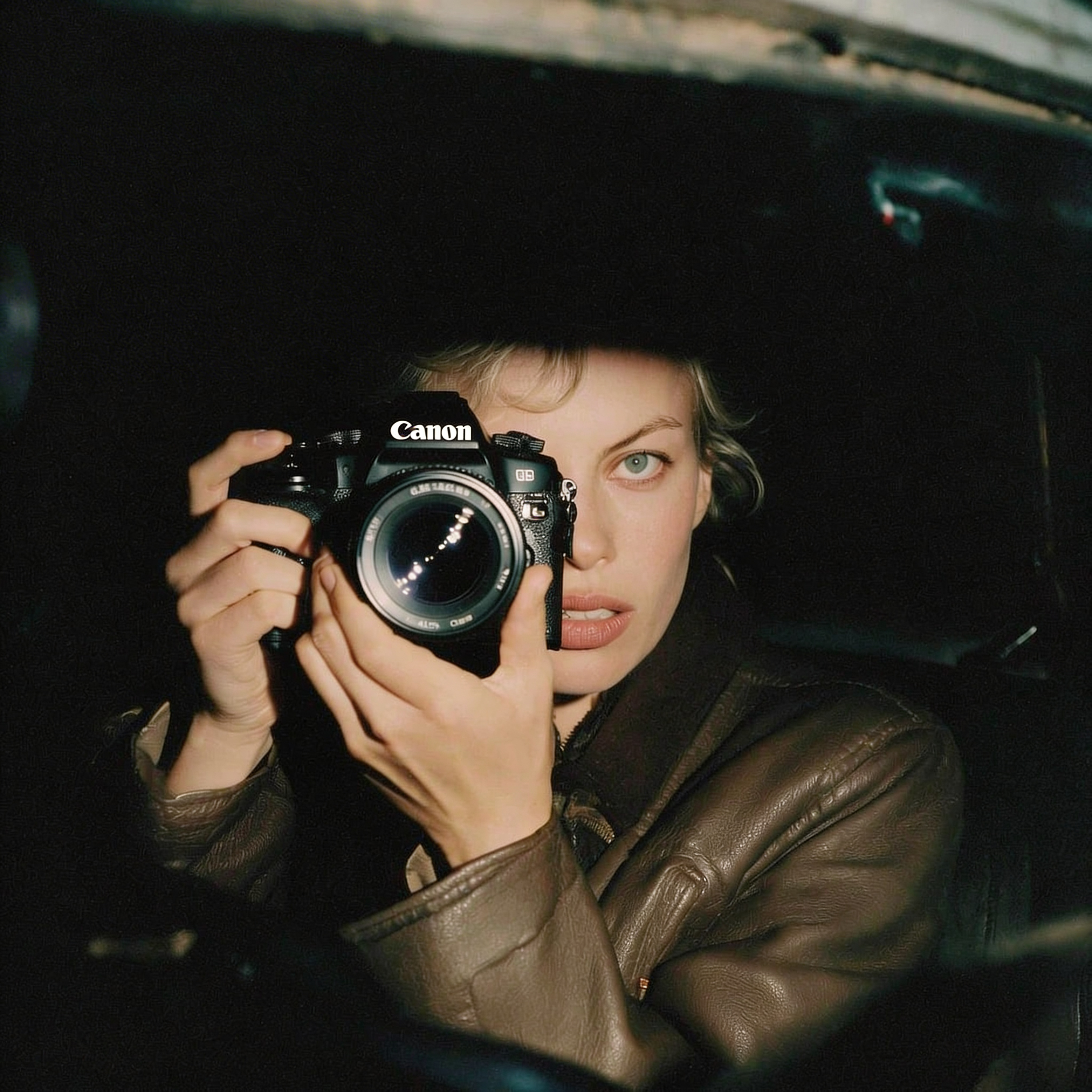
There is a very specific smell in tech when something is about to go wrong. It is not loud, or even scandalous. It is subtle, glossy, and dressed in the language of innovation.. performative innovation. We felt it again this week when early previews surfaced of a cinematic image mode inside Freepik, a UI layered with camera bodies, focal lengths, apertures, lens brands, all wrapped in the aesthetic authority of professional cinematography. Felt really familiar, something we couldn’t put our finger on.. oh yeah, Higgsfield did this almost identically. Freepik’s version is not officially rolled out, but rather an early look shared publicly on X. But early looks can signal direction.
If you have spent twenty-plus years behind real glass, as many of us have, you know that optics are not vibes. They are physics. A focal length compresses space according to geometry. An aperture shifts depth of field according to measurable light behavior. A sensor carries dynamic range characteristics that can be tested, charted, and reproduced. There is no romance in that. It is math and material science.
Diffusion models do not bend light. They bend probability. That difference is not semantic, it is foundational, especially in AI.
When an AI tool presents real camera bodies and lens specifications as operational controls, it borrows the authority of physics. It can signal to a reasonable user that these parameters correspond to mechanical causality. If the system beneath does not simulate optical mechanics, and general-purpose diffusion models typically do not, then the interface risks implying a behavior that does not exist.

We have been here before.
When Higgsfield AI introduced similar camera language, the community pushed back. The issue was not aesthetic inspiration or how good it looks, that doesn’t matter in this context and must be logically separated from the conversation to eliminate the emotional argument for it. It was the implication of physical equivalence, and after scrutiny mounted, the presentation shifted. They redesigned it but still do not clearly display an explicit on-tool disclaimer. That shift appeared to follow sustained community pressure, showing consumers and users have influence in this dynamic.
And ambiguity in tech history rarely ends well.
In the late nineties, startups sold “AI powered” search tools that were little more than keyword indexing with a veneer of machine intelligence branding. In the early 2000s, consumer electronics companies marketed megapixels as a proxy for image quality, ignoring sensor size, lens quality, and dynamic range. Consumers were trained to equate bigger numbers with better results, until reality corrected the narrative. In fintech, algorithms were branded as neutral and objective while embedding biased training data. In each case, marketing raced ahead of mechanics and eventually corrected course.
The correction always came, and it was rarely gentle. Right now AI tools are at a similar inflection point. The gold rush rewarded spectacle. Viral demos, interface theater, hardware cosplay, and so on. But we are entering an accountability era now where consumers and users see through everything. The marketing tactics of the past simply do not work on the general population any longer en masse. Regulators are watching more closely too. There may be a pause on certain regulatory actions at the moment, but policy direction can shift quickly with elections. Investors are asking sharper diligence questions as well, and creators are no longer naive beta testers. They are cautious, skeptical, often wounded. A dangerous combination for startups to have as their revenue stream if they don’t properly position their tools or platform accurately.
And this is where the camera metaphor becomes sensitive. Artists already view AI through a prism of displacement anxiety, data scraping controversies, and authorship debates. When platforms present simulated camera systems as if they behave like real-world optics, it reinforces a concern that AI companies may be prioritizing aesthetic mimicry over engineering transparency.

The difference between inspiration and implication is everything.
If a platform says, clearly, these are cinematic aesthetic profiles inspired by lens behavior, we are in honest territory. If it presents branded camera controls, or indicates without clear on-tool disclosure that they are stylistic abstractions, we enter expectation mismatch territory. And expectation mismatch is not just a UX flaw, it can raise consumer protection questions depending on presentation. Especially in a climate already charged with litigation around business practices.
The reasonable user standard does not care what engineers understand internally. It asks what a user would infer from the interface. If the inference is that focal length affects perspective compression in a physically accurate way, and it does not, then the presentation is misleading.
The legal dimension here is not purely theoretical, deceptive advertising frameworks hinge on implied claims, not just explicit ones. When you borrow the visual grammar of professional cinematography, you risk making an implied claim.

This is not anti AI, it is pro clarity and transparency in an age of over stimulation and attention getting tactics at massive levels. Ironically, the technology is powerful enough to stand on its own, diffusion models can generate extraordinary imagery, it doesn’t need the extra hype.
The insecurity lies in the interface choice.
Tech has a long history of adopting physical metaphors to ease adoption. The desktop metaphor in operating systems, or how about the folder icon. No, wait, the floppy disk save icon that persists long after the hardware disappeared is a great one. But those metaphors were transparent abstractions, and they got more obvious as time has passed. No one believed their digital document physically lived inside a manila folder, but it felt cool and made it more relative to our shared physical reality, helping with adoption. If you don’t see where I’m goin with this, you soon will.
The camera UI is not necessarily the problem singularly, but rather a visible expression of a broader pattern in marketing and business incentives. It is a symptom of systemic pressures in business and marketing that have long favored spectacle. The camera UI in AI is different because it can imply physical simulation of optics, and that is where clarity matters most.
When that implication collapses under scrutiny, trust collapses with it. So if the goal is adoption, the irony is you are pushing back adoption and potentially harming it.

For brands, the short term gain is obvious but potentially unsustainable. Cinematic mode sells, familiar optics language reduces friction, users feel like they are controlling something tangible. But the long term cost is reputational debt if expectations diverge from technical reality.
For consumers, repeated exposure to overpromised AI tools breeds cynicism, and rightfully so. A filmmaker tries a so called lens simulation expecting optical depth behavior and receives stylistic approximation. The conclusion is not nuanced for them as much as it is for the company, it actually becomes AI is hype, AI is fake, and a litany of other criticisms much darker. That cynicism bleeds into every tool, including the ones built responsibly, as well as the ones using it, literally inviting negativity where it shouldn’t be directed towards.
For creators, the damage is existential. Trust is the currency that allows experimentation. If artists feel misled by interface theater, they disengage.
There is still a moment here for correction writ large though. AI is so new that mistakes are expected, it’s what you do with those mistakes and how you approach their correction or if you do at all, that matters most. If Freepik has not officially rolled this out, then this is a fork in the road. Clarify the language, remove brand forward optics that could imply mechanical causality, including graphical marketing used to sell the visual idea of real cameras, and it becomes aesthetic experimentation rather than questionable marketing.
The deeper question for the entire AI industry is much more philosophical. Are we building tools that stand confidently in their own abstraction, or are we dressing probabilistic systems in the costume of physics to borrow legitimacy and make money with no regard to truth?

The next wave of winners will not be the loudest, they will be the clearest. They will explain what their models and tools actually do and how that translates to real world needs. They will articulate where simulation ends and reality begins. They will respect the intelligence of artists rather than gamifying it.
We are moving from the spectacle phase of AI to the scrutiny phase. I think we all welcome it too because it means it the tech and those servicing it and using it are all maturing as a vertical, together. That shift is cultural, legal, and financial and I t will define who survives.
Artists are not anti technology, they are anti deception in presentation. Tech has often struggled with this perception in the arts. Rarely partners, often extractive in structure, and not always led by working artists with lived experience.
The camera that was not there is not a scandal yet. It is a signal of change needed for maturities sake.
And in this atmosphere, signals matter more than slogans.
Resources:
Freepik – https://www.instagram.com/freepik
X – https://x.com/
Leave a Reply